 Call now

When choosing new flooring, one of the most common questions people ask is simple: is laminate flooring waterproof?
It’s an important question, especially if you have pets, children, busy rooms, or areas where spills are likely. Laminate flooring is a popular choice because it is stylish, practical and affordable, but it is important to understand how it performs around moisture before you decide where to use it.
In this guide, we’ll explain whether laminate flooring is waterproof, what water-resistant laminate means, where laminate works best, and when another flooring option may be more suitable.
What Does Waterproof Flooring Actually Mean?
Before looking at laminate specifically, it helps to understand the difference between waterproof and water-resistant flooring.
Waterproof flooring is designed to withstand water without damage when installed and maintained correctly. This makes it a better option for rooms where moisture is common.
Water-resistant flooring can handle small spills and everyday moisture for a limited time, but it should not be exposed to standing water or excessive moisture for long periods.
This difference matters because not all flooring products perform the same way, even if they look similar.
Is Laminate Flooring Waterproof?
In most cases, standard laminate flooring is water-resistant rather than fully waterproof.
Laminate flooring is usually made from several layers, including a decorative surface layer, a protective wear layer and a core board. The top layer is designed to resist everyday wear, scratches and minor spills, but the core is often made from wood-based material such as high-density fibreboard.
This means that if water gets through the joints, edges or damaged areas, it can cause the boards to swell, lift or lose their shape.
However, not all laminate flooring is the same. Some modern laminate products are designed to be more resistant to water, and a few specialist ranges are marketed as waterproof. The level of protection depends on the product, the locking system, the installation method and the manufacturer’s guidance.
For that reason, it is always worth checking the product specification before choosing laminate for moisture-prone areas.

What Happens If Laminate Flooring Gets Wet?
If laminate flooring gets wet, the result depends on the type of laminate and how long the water sits on the surface.
A small spill is usually not a problem if it is cleaned up quickly. Most laminate flooring can cope with everyday accidents, such as a dropped drink or wet shoes, as long as the moisture is not left to soak into the joints.
Problems are more likely when water is left standing for a longer time. If moisture gets between the planks or underneath the floor, it can affect the core of the board. This may lead to:
- Swelling
- Warping
- Raised edges
- Bubbling
- Gaps between boards
- Permanent damage to individual planks
Leaks, appliance issues or repeated exposure to moisture can be much more damaging than an occasional spill. Once laminate boards swell, they usually cannot be repaired and may need replacing.
Can Laminate Flooring Be Used in Kitchens?
Laminate flooring can be used in some kitchens, but it needs to be chosen carefully.
A suitable water-resistant laminate can work well in kitchens where spills are cleaned up quickly and the floor is properly maintained. It can also be a good option if you want the look of wood at a more affordable price.
That said, kitchens are higher-risk areas because of sinks, dishwashers, washing machines and regular spills. If you choose laminate for a kitchen, it is important to pick a product that is designed for this type of environment and to follow the manufacturer’s care advice.
For homes where water exposure is more likely, luxury vinyl tile or vinyl flooring may offer extra peace of mind.
Is Laminate Flooring Suitable for Bathrooms?
Bathrooms are where you need to be more cautious.
Standard laminate is generally not the best option for bathrooms because the floor is likely to be exposed to steam, splashes and standing water. Even a water-resistant laminate may struggle if moisture regularly gets into the joints or edges.
Some specialist waterproof laminate products may be suitable for bathrooms, but only if the manufacturer clearly states that they can be used in this type of room.
For most bathrooms, LVT or vinyl flooring is usually the safer and more practical choice.
Where Does Laminate Flooring Work Best?
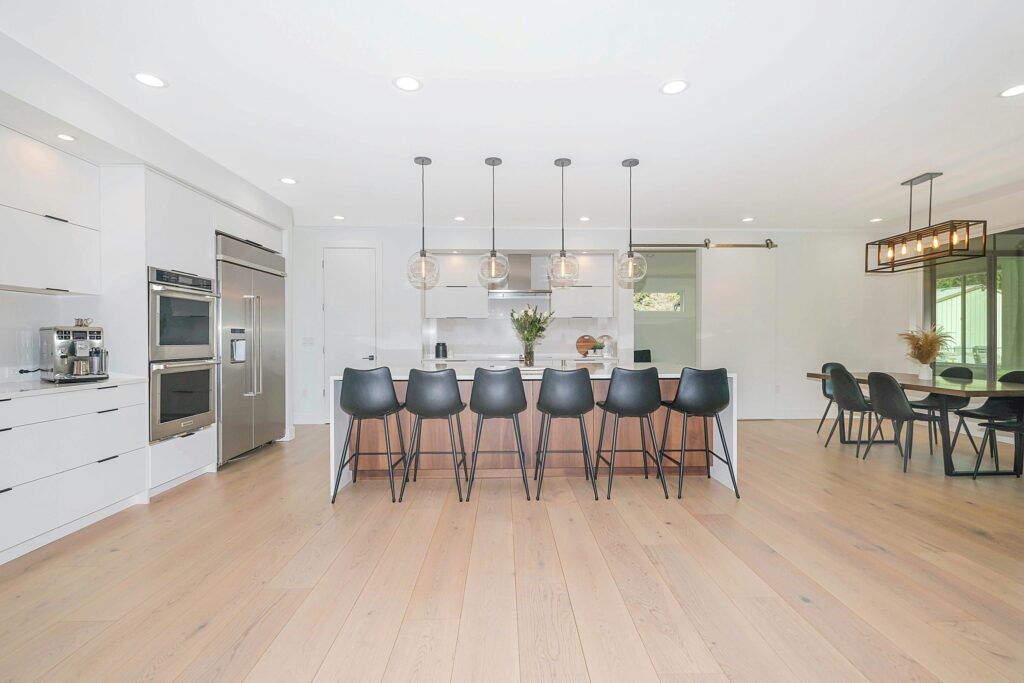
Laminate flooring is a great choice for many areas of the home, particularly dry or lower-moisture rooms.
It is commonly used in:
- Living rooms
- Bedrooms
- Dining rooms
- Hallways
- Home offices
- Playrooms
These spaces are usually less exposed to water, making laminate a practical option for everyday use. It is also popular because it is available in a wide range of wood-effect designs, colours and finishes.
How Can You Protect Laminate Flooring from Water?
If you choose laminate flooring, a few simple habits can help protect it from moisture damage.
Wipe up spills as soon as possible, especially around joins and edges. Avoid using too much water when cleaning, as soaking the floor can push moisture into areas where it should not go. A lightly damp mop is usually better than a wet one.
It is also worth using mats near entrances, sinks or pet bowls to reduce the risk of water sitting on the floor. If laminate is being installed in a busier area, professional fitting can help make sure the boards are laid correctly and the joins are secure.
Always follow the care instructions for your specific flooring product, as different laminates can have different requirements.
What Are the Best Alternatives for Wet Areas?
If you need flooring for a room where water is common, laminate may not always be the best choice.
Two popular alternatives are:
Luxury Vinyl Tile
Luxury vinyl tile, often known as LVT, is a durable and waterproof flooring option. It is available in realistic wood and stone designs, making it a strong choice for kitchens, bathrooms, utility rooms and busy family homes.
Vinyl Flooring
Vinyl flooring is another practical option for areas where moisture is a concern. It is easy to clean, comfortable underfoot and available in a wide range of styles.
Both options can offer more protection than standard laminate in rooms where spills, splashes or humidity are part of everyday life.
Final Thoughts
So, is laminate flooring waterproof?
The answer depends on the product. Standard laminate flooring is usually water-resistant rather than fully waterproof, but some modern laminate ranges offer a higher level of moisture protection.
For dry areas such as living rooms, bedrooms and hallways, laminate can be an excellent choice. It is stylish, affordable and easy to live with. For bathrooms, utility rooms or spaces where standing water is likely, LVT or vinyl flooring may be the better option.
The best flooring choice always depends on the room, your lifestyle and the product specification. If you are unsure, it is worth getting advice before you buy so you can choose flooring that looks great and performs well in your home.